The corncrib, called such because of the open sides of the structure that allow the whole husk corn to continue to dry while in storage. This created good ventilation from side to side. Corn on the ear could be dried earlier and kept longer than shelled corn. The corn crib was an architectural masterpiece made from wood slats and wire mesh, with cement elevated floors to keep out rodents. Corncribs were used well into the 1950's. Advances in storage, combines, picking methods, and technoligy have slowly brought these stately outbuildings to their demise. Those that remain now stand weathered and remind us of a bygone era of shelling by hand and feeding hogs. Most corn today is shelled from the cob by machine during the harvest and then stored in grain bins. The larger corncribs, as this rectangular Amana one, has a large center space used to store wagons in the past.
Thursday, April 27, 2017
Hospital Barn in Amana
The barn, built before 1900, stands on the eastern end of Amana in the Visitors Center complex facing the wire corn crib. The stately barn is constructed of sandstone and wood. Here, the Amana farmers used to tend calves that were in need of extra care. They stayed in sheltered stalls beneath the hayloft where they were cared for daily. To the east of the barn grounds is Price Creek, creating a most beautiful setting for the complex.
Sunday, March 19, 2017
Grain Sacks
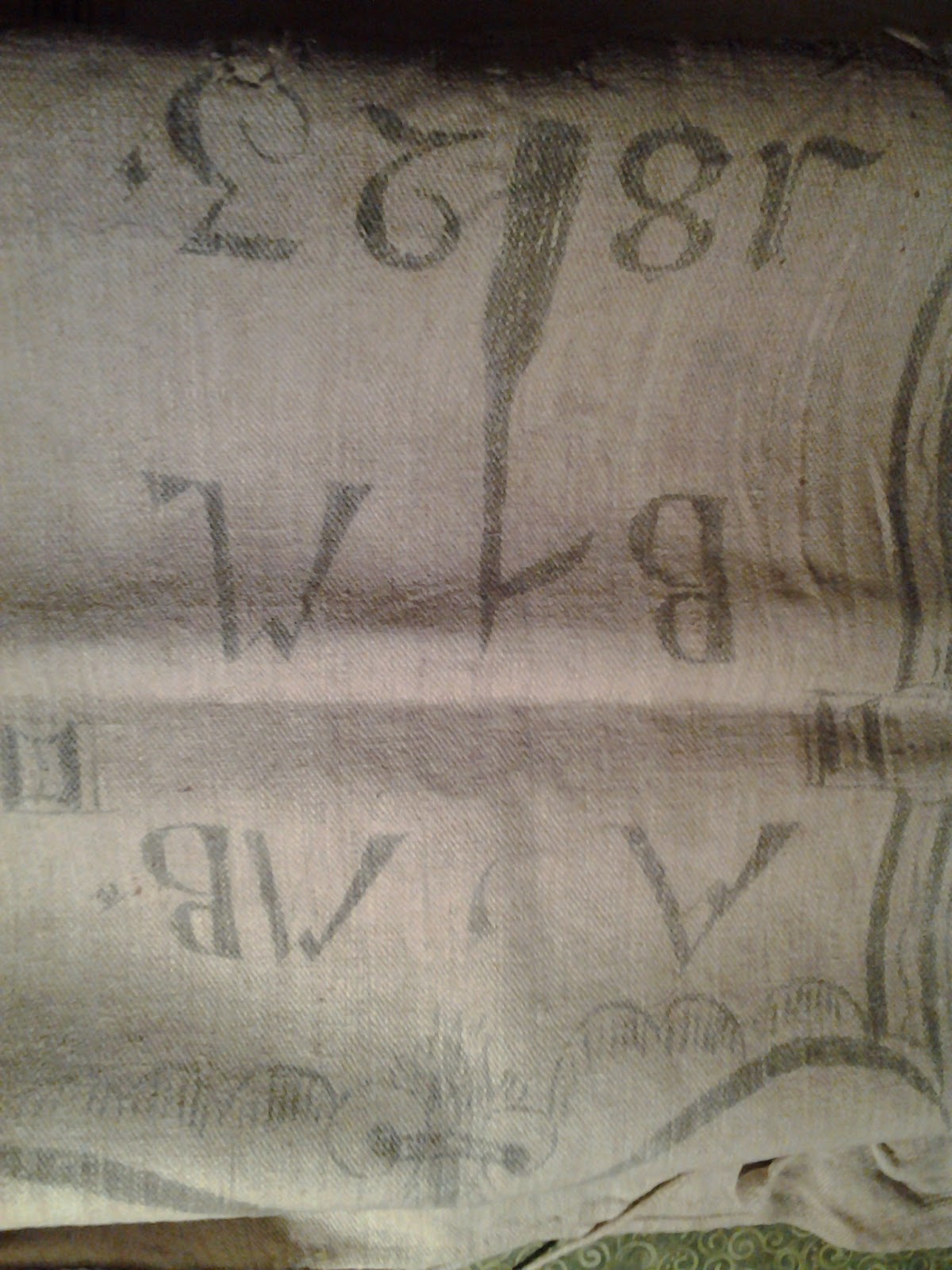
Grain sacks are some of the most beautiful relics of old Ebenezer, the first Amana village of the Amana Colonies in New York, that I have ever seen.They are very limited in numbers, handmade at home or by a grain sack maker in the 1800's from organic hemp linen, a very durable fabric that is still solid today. The grain sacks were used by the local farmers, merchants for restaurants and hotels, and soldiers to carry grains to the local mills. After the grain was ground the sack was refilled with flour and returned to owners. The elaborate calligraphy on the sacks were hand, block-stamped with a tar-based stencil ink bearing the first and last names of the owner, his title, the year, inventory number, and town where they worked and lived. The marks, mends, durability, dirt, the uneven wear, the softness with age, and stencils of these bags added to their appeal. If you appreciate the nuances of handwoven and hand stitched antique textiles, then these are pieces to collect. The Europeans viewed their grain sacks as family status symbols that were passed down from generation to generation and now found in estate sales, dowry chests, or floorboards of old farmhouses. The German immigrants to Amana brought with them a most unique textile!
Thursday, September 29, 2016
Free Patterns
Many of the designs on old footstools, house blessings, mittens, pictures, pillows, couch coverings, and more were obtained from free patterns in German magazines as HAUSFRAU, Almanacs, and other publications as newspapers. These patterns were in rich colors, black and white or gray prints. Some were laid out in square graphics for needlepoint, some for perforated paper, some for copper stencil printing on cloth, others for knitting or crochet. Some patterns were made for cross stitch and crewel. All designs were very much appreciated in a time when not much decoration was allowed. The results of these patterns were some very fine products.
Sunday, August 21, 2016
Garden House or " Gardeheisel"
Each large garden in communal Amana had a small, one room building called a "Gardeheisel" in German. It served as a storage shed for many handmade garden tools, a shady resting spot for the dreary garden workers and a break room for mid morning and afternoon snacks often the way in old Amana. There were many of these in the villages where there were community kitchens and large kitchen gardens. They were approximately 6 feet by 8 feet in size. Some still exist as historical structures, even if not in great condition.
Thursday, August 4, 2016
Amana Lily Lake
One of most beautiful sites in the Amana Colonies is the Lily Lake especially in late July and early August when the American lotus is in full bloom covering the 170 acre half marsh, half lake area. It is located between Middle and Amana, drawing tourists for many years for site seeing, fishing, and recreation. It is about 2-3 feet deep. The lowland filled with water from thr Mill Race after a break in the 1870 levee. The lilies may have been planted by the original settlers, the Mesqwakie, who harvested and ate the tubers and roasted the lily seeds. In and around the lake are over 200 native plants and 7-8 kinds of animals call it their habiat. The lake also served as a source of ice for Middle refrigerastion business before electricity and stored water to power turbines at the dam. Water was also stored for daily needs. Friend photos.
Friday, July 22, 2016
The Flour Mill
In the communal days of Amana before 1932, the Amana Society purchased anything deemed necessary to run the Society efficiently such as raw wool, oil, starch, dyes, and such. Most of the grain was purchased from the outside for the flour mill, still standing in 1939. Cotton goods were purchased from the southern states and used in the calico printing process. Amana Society would also hire outside laborers to do industrial and agricultural jobs. Two flour mills, powered by the mill race in Amana, processed the community's own small grains as well as those of neighboring farmers. Profits from these mills were used to purchase goods from outside the community. A 1923 fire destroyed the flour mill in Amana and the woolin mill causing great loss of capital. Below are some photos of the flour mill in West Amana.


Subscribe to:
Posts (Atom)