Saturday, May 6, 2023

HOOKED RUGS

Many great textiles arts in early Amana kept community members busy. The hooked rug, seat covers and cushions were some of them. Materials included finely cut and selected wool and cotton fabrics. Some were dyed and others used as is. Hooks and punches were made by local blacksmiths, cooper, and tinsmiths. The rugs were made by punching fine fabrics or yarns through burlap or linen backing
stretched on a wooden frame, then finished with a linen or cotton back.  Designs were hand drawn or bought patterns, inspired by the many flowers and animals in the yards.  The rugs are still a beautiful and prized folk art in Amana.


RUNNING RABBIT COOKIE CUTTER

The tinsmiths in communal Amana would get creative at the holidays or at the request of his children when he made cookie cutters.  One such popular cutter was the running rabbit cutter.  It was 8” long or shorter and very prized in one’s collection.  At Easter, bunny-shaped  sugar cookies were a German holiday tradition in Amana, prized as much as Christmas and Thanksgiving traditions. Every child received at least one 8 inch long cookie courtesy of the kitchen workers, the tinsmiths, and the Easter Bunny!  Colored eggs and other cookie shapes as fish, chicks, ducks, ponies, and squirrels also filled the basket. Cookies had a raisin eye or of one chocolate chip, with a brown sugar dough, and vanilla icing...all very tasty! This is a great German tradition passed down in many Amana families which is still shared today, while some wonder which village started the original recipe!
Below is a recipe from the vintage AMANA RECIPES cookbook.

OSTER HASEN (Easter Bunny cookies)
1 1/8 cups brown sugar, firmly packed
1 1/8 cups granulated sugar
4 large eggs
4 cups sifted flour
1/4 tsp baking powder
2-3 Tblsp melted butter or shortening
Beat eggs, add sugars and beat with electric mixer at high speed for five minutes. Gradually add dry ingredients which have been sifted together. ADD melted shortening and roll out on floured board to about 3/8 inch thickness. Cut with bunny shaped cookie cutter, add raisin or chocolate chip for eye and bake greased cookie sheet at 350° for 15-20 minutes.


Thursday, April 13, 2023

Amana Kolonieweg Trail

 If you visit the Amana Colonies near the Lily Lake between Amana and Middle villages, you will find the 3.1 mile trail connecting them. It is an easy, flat trail for locals and visitors to bike, walk, cross country ski or skate. The trail is paved most of the way with the south side gravel. Along the way you will experience gorgeous views of the blooming lotus on the lake, the Millrace canal, pastures, cows, farmland, forests, backyards, a memorial brick garden, numerous wildlife species. Some animals live here, others are migrating. Lots of nature sounds, flora and fauna will captivate you! 

The Amana Golf Course and East Amana are also nearby and accessible via a marked route. Parking is on the north side of the Lily lake where you can also find picnic tables to sit a bit and rest or nosh while you enjoy the fragrance of the lotus. The trail is open year round and dogs on leashes are welcome! Ctac photos


Amana Nature Trail in Homestead


 In a very beautiful setting north of the village of Homestead in the Amana Colonies, you experience a 3.3 mile loop trail. It is a moderate route, taking about 1 hour to complete. You will find it great for hiking, birding, and Cross country skiing. It is a peaceful, quiet walk while you explore the area. 

The Amana Nature Trail is a system of 3 trail loops between highway 6 and 151 by the Iowa River on private, Amana Society land north of Homestead. It is well marked for different levels of walking long or short routes leading through the forest to a bluff overlooking the Iowa River where a rock Indian Dam once appeared. It is now under 8 feet of silt and sand.  Three Indian burial mounds are also in the area, just off the trail, that date back about 1,000 years.

You can experience a variety of wild flowers, shrubs, hardwood trees, many bird varieties, wild turkey, deer, and fauna. Fb photos

Saturday, October 8, 2022

Millwright Shop


The history of the millwright dates back to the indus­trial revolution. While milling machines, power looms, drill presses, lathes, and other equipment made mass production of goods possible, these new machines were too complicated for the average worker to understand. It became necessary to assign workers with specialized training to install, maintain, and repair equipment. With the growth of industrial establishments and the increas­ing complexity of machines, the millwright became an integral part of the workforce. The Amana woolen mill, operated by waterpower in communal days, needed and employed such a millright. The Millwright Shop stood on the grounds of the Woolen Mill complex. 
It is now the Woolen mill sales room on the property of the Millwright hotel.


Monday, March 28, 2022

Indigo Blue Calico

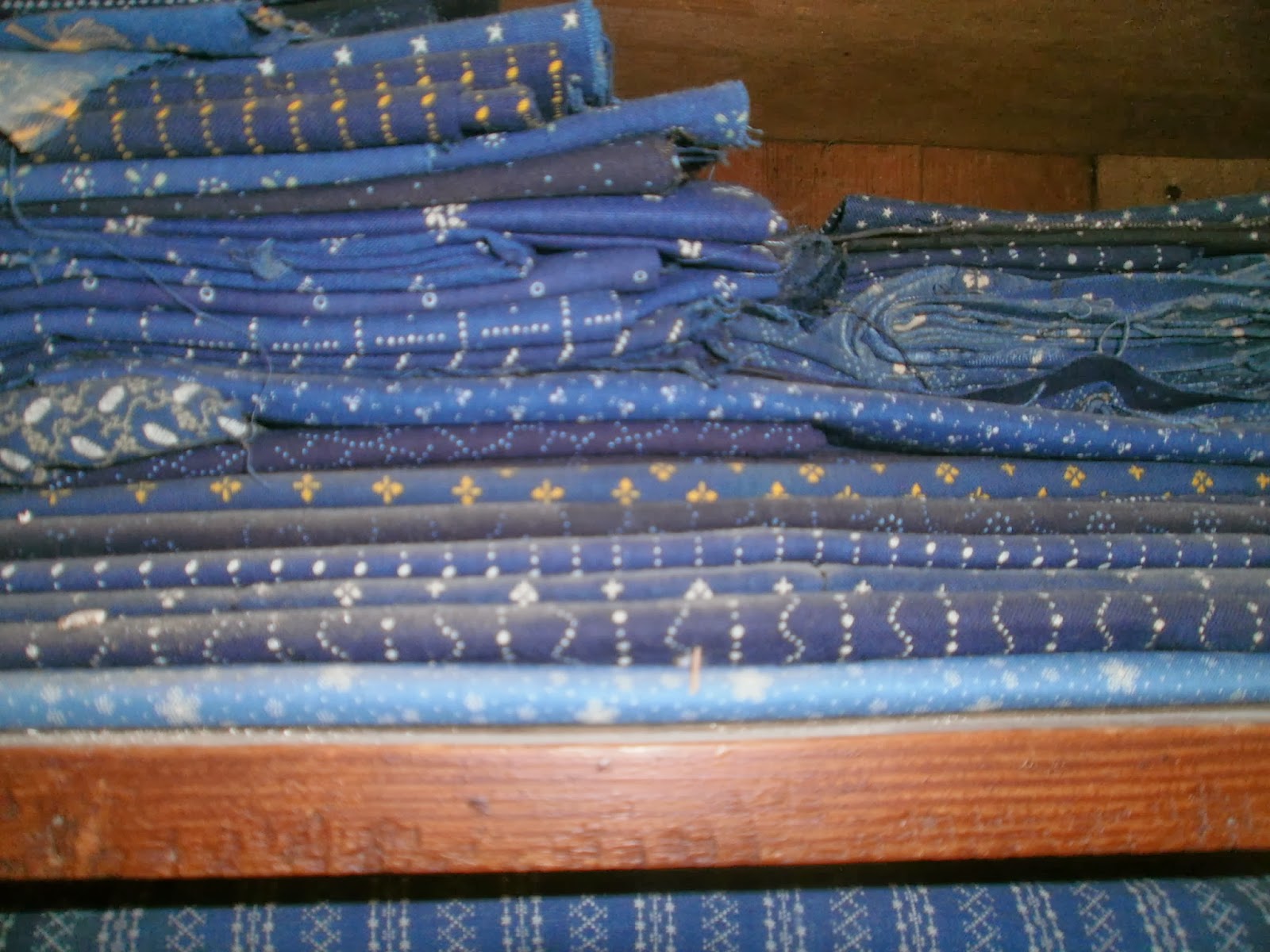
Indigo blue calico, my favorite fabric, was printed in Amana from 1861-1917, 4500 yards a day in its prime. Amana Calico was produced from the 1860’s until WWI when imports from Germany, which included the dyes needed for producing the cotton goods, were shut down. The last shipment of dye in 1916 kept the mills running for about a year, but once the supply was gone, the mills permanently closed. At the height of calico production in 1891, approximately 4000 -4500 yards of calico were printed each day. The mill or "print works" was located on the site of the present Amana Furniture Shop, the smallest brick building to the west being part of the original factory that employed 30 workers. The waterpower from nearby Price Creek was used to power the printworks mill. Designs were random geometric, floral, borders, and repeated stripes with about 500 patterns documented. The fabrics were used for summer work clothes, upholstery, curtains, quilts, etc. Many families dressed alike in this fabric. Calico patterns were printed with hand carved blocks, paste and acid resist rollers, and discharge print blocks.  Dyes were special indigo plant dyes, when exposed to the air would oxidize and turn yellow-green to indigo.  These dyes were not fast in  the early days so would often leave residue on the pine benches and hands, only to be bleached clean later. The Print Works mill closed in 1917 due to the lack of imported  dyes and supplies at the onset of WWI. The last  shipment of indigo dye, processed and imported from Germany, was brought on a submarine that slipped through a net of British destroyers to complete a harrowing voyage from Bremenhaven to Baltimore. This submarine, it is said, may have carried a special envoy from Germany to Washinton D.C. to appeal to the USA not to enter WW1. But they did, so all dye and goods shipments ceased. The story of the sub and crew spread to the USA and quickly as it carried goods for Amana, Iowa, a German settlement. So naturally this kept people away from Amana as anti German feeing was at a high. Despite all this the printworks still provided a means to sustain the early Amana community. The printed fabric sold for a reasonable price and allowed working women to afford new and beautiful calico cloth for clothing, a treasure in life for most 19th century women. Today the German influenced, indigo calico dyed fabric, which is very rare and rich as ever,  is much appreciated by viewers and collectors.  


Saturday, March 26, 2022

The Bockwurst

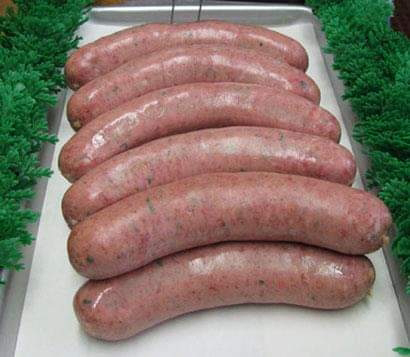
One of the early signs of spring in the Amana Colonies is the making of the Bockwurst at the Amana Meat Market. It is an award winning sausage that some refer to as Easter Sausage as it is only available during Lenten season up to Easter. 
Bockwurst is a German sausage first mentioned in 1827 in Bavaria area of Germany.  An urban legend in Berlin claims that it was invented in 1889 by restaurant owner R. Scholtz of Berlin. It is one of the most popular varieties of delicious sausages in Germany, a source of much national pride and now found in many areas of the USA. Traditionally made of finely ground pork, veal, spices, and love, the Bockwurst is unlike the Bratwurst in that it contains a higher ratio of veal in its recipe. There are many variations of it in Germany but usually served with the spring release of dark Bock beer.  So good...
Since 1856 Bockwurst has been made in the Amana Colonies using an award winning recipe that includes pork sausage, ground spices, and fresh green chives from garden beds. It is sold at the Amana Meat shop by the pound. 
A traditional family German Bockwurst recipe is as follows:
400 g pork butter, trimmed
100 g back fat
100 g pork belly
18 g kosher salt
6 g onion powder
3 g white pepper
2 g sweet paprika
.5 g ginger
1 g nutmeg
1g whole coriander
1 g celery seed
1 tsp lemon zest
1 egg
100 ml whole milk
Grind all the meats, add egg, milk, spices into a food processor 30 sec. Stuff meat into standard 28-32 mm hog casings forming 4" links. Refrigerate up to 3 days, freeze 3 months. 
This recipe is for 2.2 lbs or 7 links but you can easily scale to suit your needs. Recipe can be doubled. Guten Apetit and Brost!
photos by friends